Planning & Timing
Exterior Painting Before the Fall Rains: Your Timing Window
Sacramento's exterior painting season closes in mid October. Here is how much time you actually have, why temperature matters more than rain, and what happens to paint applied too late.
Quick answer
The Sacramento exterior painting window runs from roughly April through mid October, and August into September is the best stretch of the entire year. Paint needs surface temperatures above 50 degrees and a dry window of 24 to 48 hours to cure properly, conditions our first real rains end for the season.
Key takeaways
- 01Sacramento's exterior painting window effectively closes in mid October most years
- 02Surface temperature matters more than air temperature and most failures trace back to it
- 03Paint needs 24 to 48 hours of dry weather to cure, not just a dry afternoon
- 04August and September deliver the most reliable cure conditions of the year
- 05A full exterior on an average Sacramento home takes three to five days
Quick answer
The Sacramento exterior painting season effectively closes in mid October, which means you have roughly ten weeks left as of August 2026. Paint needs surface temperatures above 50 degrees and a genuinely dry window of 24 to 48 hours to cure. Our first sustained rains end both conditions for the year.
Quick verdict: August through September is the best exterior painting stretch Sacramento gets. If your house needs paint before winter, book it now rather than in October when every painter in the region is triaging the same deadline.
The window is shorter than people think
Most homeowners assume the season ends when it starts raining. It ends earlier than that.
The constraint is not rain on the day you paint. It is whether the paint can cure. Exterior latex needs a stretch of dry, warm conditions after application to form a proper film. Interrupt that with a cold night or a surprise shower, and you get a finish that looks fine for a season and starts failing in year two.
In practice, that gives us:
- April through July. Good, though peak summer heat brings its own problem. Surfaces in direct afternoon sun can exceed the maximum application temperature, which forces us to chase shade around the house.
- August through September. The sweet spot. Warm enough to cure fast, past the worst of the heat, and well ahead of the rains.
- Early to mid October. Still workable, weather depending, and increasingly a day by day judgment call.
- Late October onward. Effectively over for the year.
Surface temperature is the number that matters
This is the detail that separates a job that lasts a decade from one that fails early.
Paint specifications list a minimum application temperature, usually 50 degrees for exterior latex. Homeowners read that as air temperature. It is not. It is the temperature of the surface being painted, and the two can differ by fifteen degrees or more.
A south-facing wall in October afternoon sun might sit at 70 degrees while the air reads 58. A north-facing wall in shade on the same day might be at 48, below spec, even though the forecast looked fine. Paint that wall and you get poor adhesion in exactly the spot that already gets the least sun and the most moisture.
We check surface temperature directly rather than trusting the forecast. It is also why a late season job may mean painting three sides of a house one day and the fourth the next.
What a rushed October job actually costs you
| Timing | Cure conditions | What tends to happen |
|---|---|---|
| August to September | Ideal | Full cure, 7 to 10 year finish |
| Early October | Good, weather dependent | Normal finish if the window holds |
| Late October | Marginal | Slow cure, adhesion risk on shaded walls |
| November onward | Poor | Blistering, peeling, early failure |
The failure mode is rarely dramatic. The paint goes on, it looks correct, and you are happy. Eighteen months later the north side starts peeling and the south side looks new. That is almost always a cure problem, not a paint quality problem, and repainting one elevation costs nearly as much as doing it right the first time.
The Dry Window Rule
Before we schedule any exterior, we run the job through the same four checks.
- 48 dry hours minimum. Not one dry afternoon. Two full days clear on either side of application.
- Surface above 50 degrees, verified. Measured on the actual wall, including the shaded elevations, not read off a weather app.
- Substrate fully dry. If it rained in the last 72 hours, the siding gets checked before anything goes on. Wood and stucco hold moisture longer than they look.
- Overnight lows checked, not just daytime highs. A 72 degree afternoon followed by a 44 degree night is a cure problem, and that pattern is common in Sacramento by mid October.
If a job fails any of the four, we move it rather than push through. A postponed week costs less than a repaint.
Prep is where the schedule really goes
Homeowners planning a late season exterior consistently underestimate prep, and prep is what eats the calendar.
A typical Sacramento exterior needs washing, scraping, sanding, caulking, and spot priming before a single finish coat goes on. On a house that has not been painted in a decade, prep can take longer than painting. Add stucco repair or dry rot on the trim and you are into a second week.
That matters for timing. If you call in the first week of October wanting a full exterior, the honest answer is usually that prep alone will carry you past the window. Calling in August means prep happens in comfortable conditions with room to spare.
If you are still deciding on color, our guide to the best paint colors for Sacramento homes covers what holds up against our UV levels, and it is worth reading before the estimate rather than after.
What to do if you have already missed the window
Sometimes the answer is to wait until spring, and a painter who tells you that is doing you a favor.
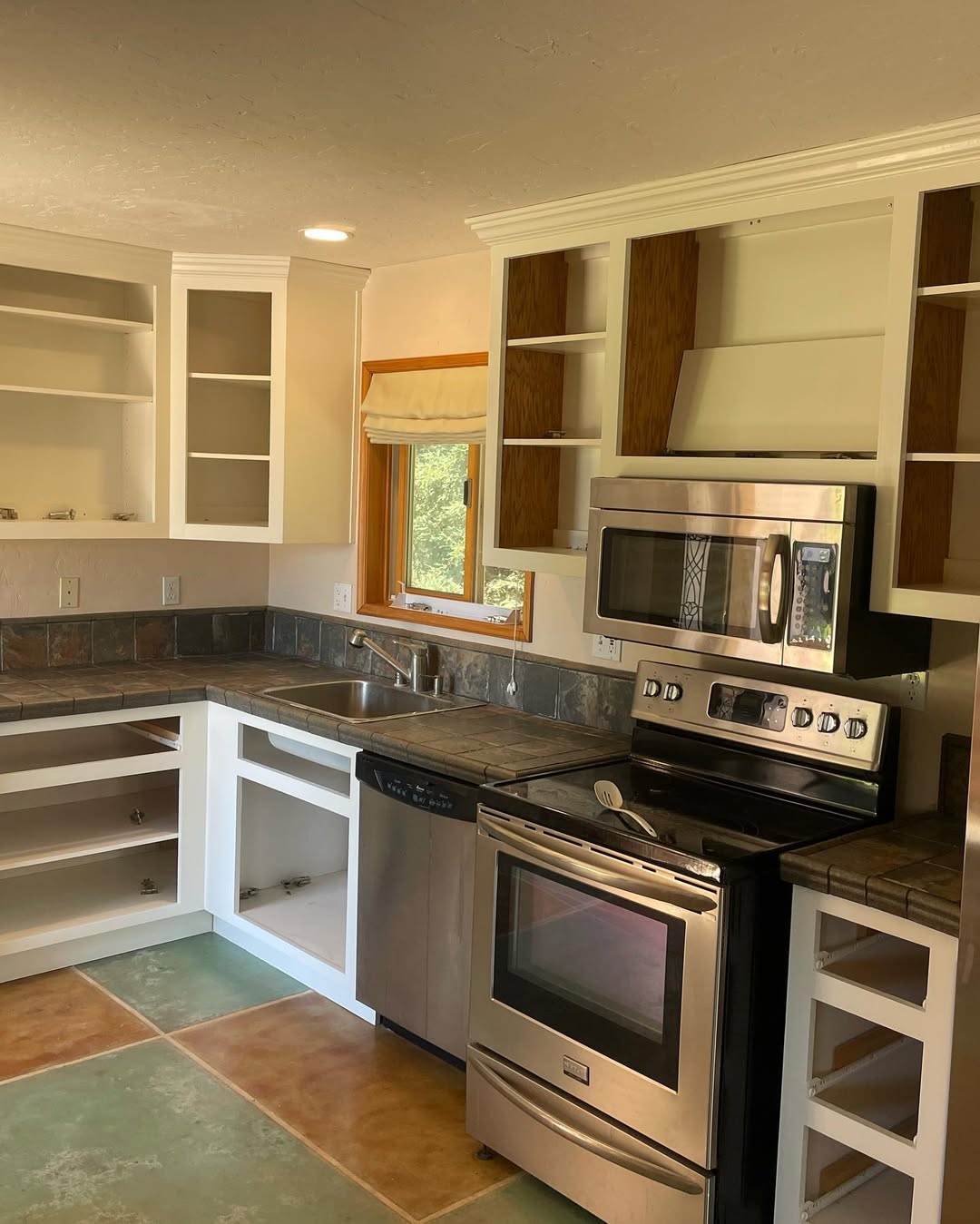
But not every project has to wait. Interior work is entirely unaffected by the weather, and winter is genuinely the best time to do it since we are not competing with exterior season for schedule. Cabinet refinishing is the same. Both are jobs homeowners tend to postpone all summer anyway.
For exteriors specifically, a small, well-timed job on one elevation is sometimes possible into late October, particularly a south-facing wall that holds temperature. That is a judgment call made on site, not a promise made over the phone.
Frequently asked questions
When is the last month to paint an exterior in Sacramento? Mid October is the practical cutoff most years. After that, overnight temperatures drop below the 50 degree minimum most exterior paints need to cure, and the odds of catching 48 dry hours in a row fall sharply.
Can you paint an exterior after it rains? Not immediately. Siding needs to be fully dry first, typically 24 to 72 hours after rain depending on material and sun exposure. Painting over damp substrate is the most common cause of blistering within the first year.
What temperature is too cold to paint outside? Below 50 degrees surface temperature is the general limit for most exterior latex paints. The number that matters is the temperature of the siding itself, not the air, and a shaded north wall can sit well below the forecast reading.
How long does exterior painting take on a Sacramento home? Three to five days for an average single family home, including prep, priming, and two finish coats. Heavy prep or extensive trim detail can push it to a week or more.
Is fall a good time to paint a house exterior? Early fall is excellent. September and the first half of October offer moderate temperatures and low humidity, close to ideal cure conditions. It is late fall, once the rains start and nights turn cold, that becomes the problem.
Book the window while it is open
If your exterior is on the list for this year, now is the part of the calendar where that is still an easy yes. We can walk the house, tell you honestly whether the prep fits the remaining window, and give you a real number.
Serving Sacramento, Folsom, El Dorado Hills, and Granite Bay. Request an estimate and we will get you scheduled before the rains decide for us.
FAQ
Common questions
Mid October is the practical cutoff most years. After that, overnight temperatures drop below the 50 degree minimum most exterior paints need to cure, and the odds of catching 48 dry hours in a row fall sharply. Late October work is possible but it becomes weather dependent day to day.
Not immediately. Siding needs to be fully dry before primer or paint goes on, which typically means 24 to 72 hours after rain depending on material and sun exposure. Painting over damp substrate is the most common cause of blistering and peeling within the first year.
Below 50 degrees surface temperature is the general limit for most exterior latex paints, and some products require 35 or 40 degrees minimum. The number that matters is the temperature of the siding itself, not the air, and a shaded north wall can sit well below the forecast reading.
Three to five days for an average single family home, including prep, priming, and two finish coats. Larger homes, heavy prep work, or extensive trim detail can push it to a week or more.
Early fall is excellent. September and the first half of October in Sacramento offer moderate temperatures and low humidity, which are close to ideal cure conditions. It is late fall, once the rains start and nights turn cold, that becomes the problem.